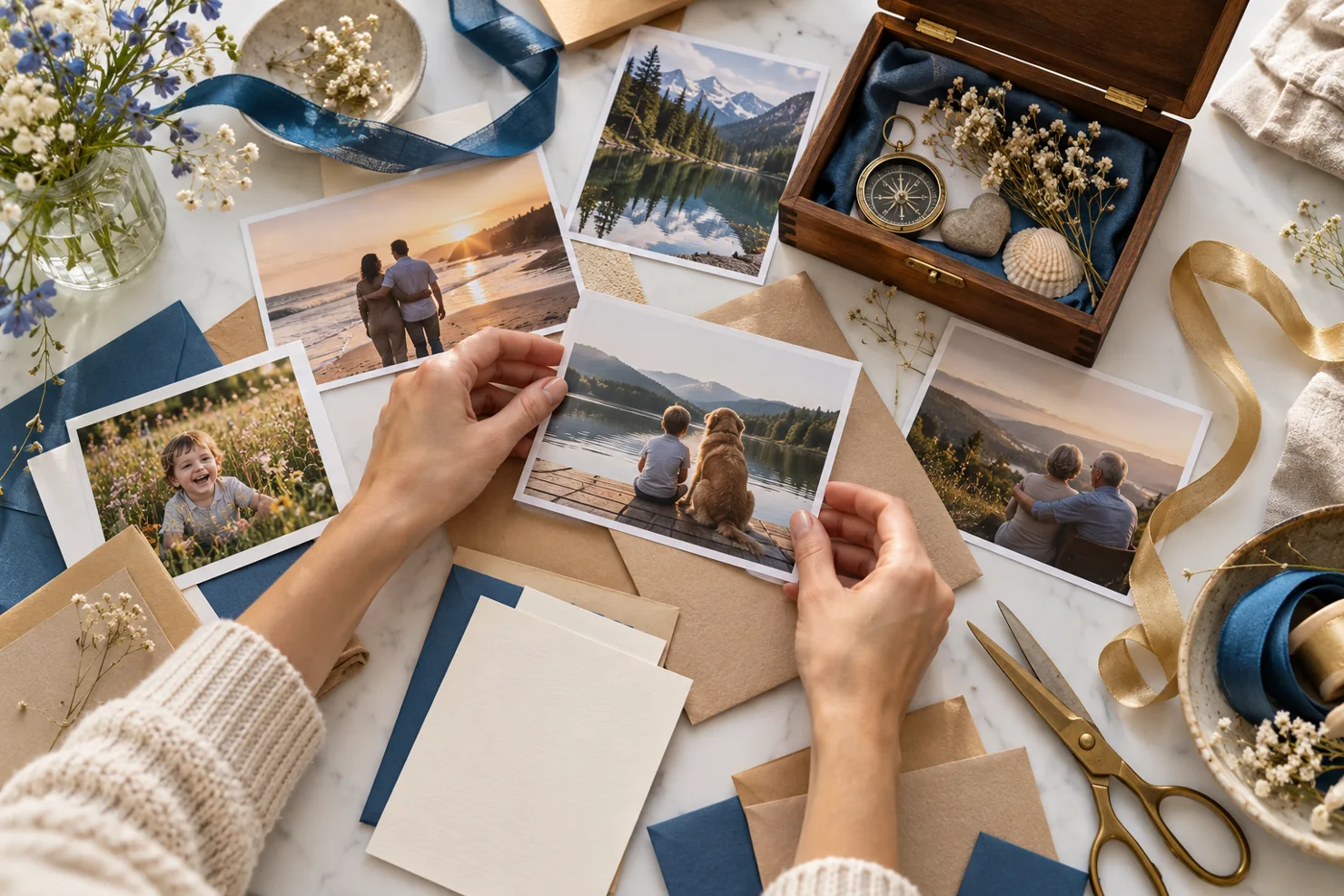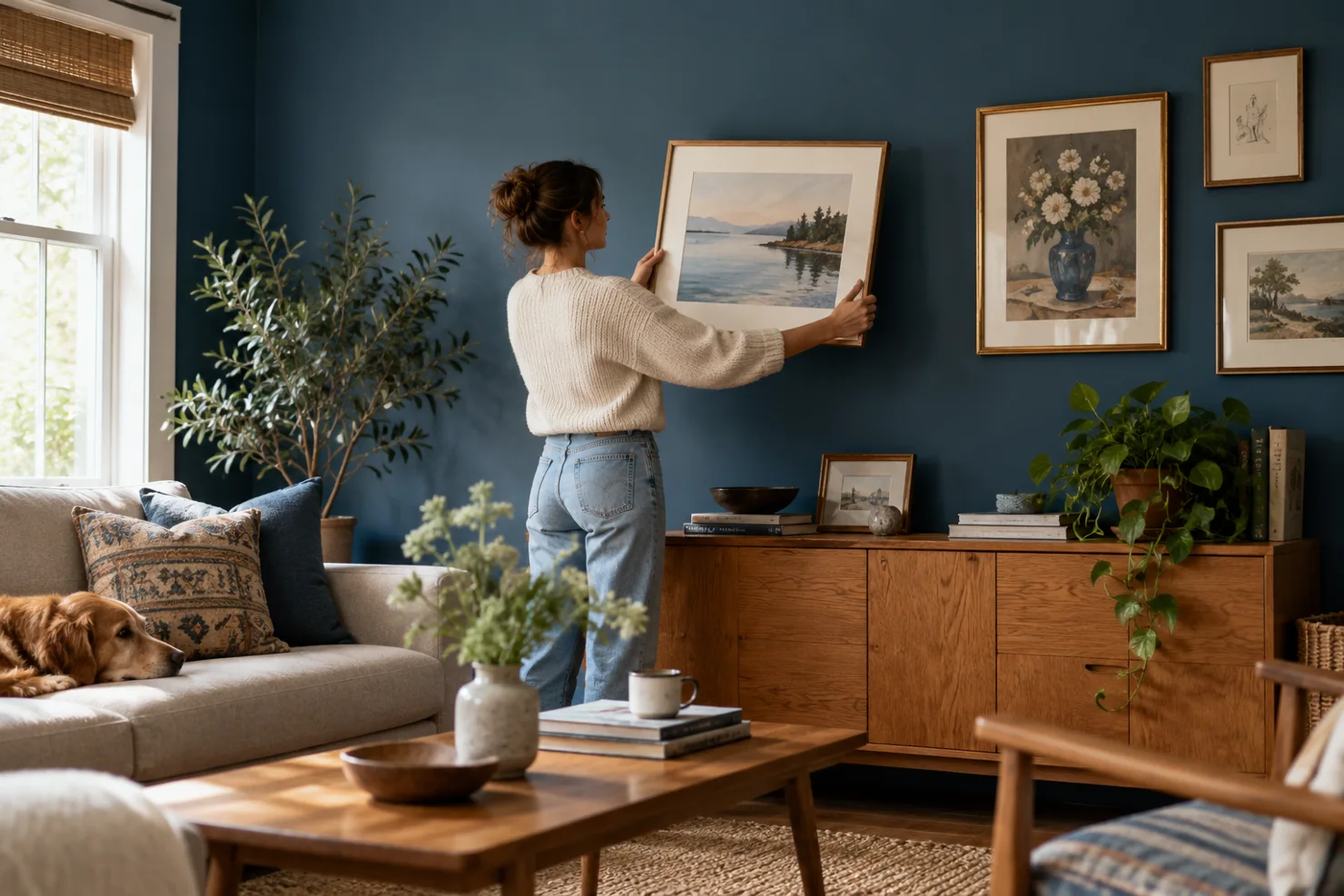
Personalized art succeeds when it belongs in the recipient's home and says something true about their life. Before choosing a design, work backward from the wall where it might go.
Find the likely place
A narrow entryway, bedroom shelf and gallery wall need different sizes. If you can visit the space, note the wall color and nearby frames. Otherwise ask a simple question about whether they have room for another print. An unframed small piece can be easier to place than an oversized canvas. A gift certificate for a design they choose together may be better when you cannot know their taste.
Measure the intended wall and picture the art at eye level. Allow breathing room around furniture and existing pieces. Do not assume that a larger print will always feel more generous.
Pick one meaningful detail
A date, a street where people met, a pet’s distinctive ears or a family phrase can carry the story. Adding names, coordinates, multiple quotes and every important date tends to make a print feel crowded. Keep the visible design simple enough to enjoy across the room, then put a longer explanation in the accompanying note.
Check whether the person wants their name or family details displayed in public areas of the home. Personal does not have to mean revealing private information to every visitor.
Consider color and framing together
A black-and-white print can bridge styles, but it may be too stark for a room with soft materials. One accent color pulled from an existing rug or book cover can connect the work to its surroundings. Check whether the print comes framed, whether a standard frame size exists, and if a mat will help. Unusual dimensions can make a modest print costly to frame.
Ask for a proof before production and inspect names, punctuation, orientation, cropping and the placement of small text. Personalized items are often difficult to return for a simple change of mind.
Choose a format for the moment
| Format | Good use | Watch for |
|---|---|---|
| Small framed print | Shelf or desk | Available surface space |
| Unframed art print | Flexible gift | Standard frame size |
| Photo collage | Shared history | Image permissions and resolution |
| Illustrated map | Place-based memory | Readable details at final size |
Browse examples of personalized prints at SpudPrint if illustration suits the person, then compare actual size and materials before choosing.
Respect the photograph
If using a family photograph, ask who owns the image and whether everyone pictured is comfortable with it being displayed. A private photo can make a wonderful gift, but it should not become an unexpected public poster. For an older print, scan a copy rather than taking the original out of safe storage.
The Library of Congress guidance on caring for photographs recommends photo-safe storage and avoiding adhesive tape directly on prints. Keep originals protected; use reproductions for display where possible.
Present the story, not just the package
Include a small card that names why this place, image or phrase matters. “This is the view from the street where you first lived together” adds context a stranger could never infer. Wrap the print to protect its corners, and tell the recipient if the frame or hanging hardware is included.
If you are uncertain, let them participate in the final choice. A short note offering to select an image or frame together can be more thoughtful than ordering a finished piece with the wrong colors or a spelling mistake.
When the art is for someone else
Look at what they already display rather than what you would hang. Are the walls full of photography, bold graphic prints or mostly empty space? Empty walls do not necessarily mean the person is waiting for art. They may prefer an uncluttered room or plan to decorate slowly. Ask a gentle question before giving something that claims a permanent place in their home.
If the recipient has recently moved, consider waiting until they have unpacked. A small unframed print or an offer to choose a frame together gives them more control. For a couple, do not choose a highly personal image without considering whether both people would want it on the wall.
What to check in an order preview
Read every name and date character by character. Confirm the address, the final trim size and whether the pictured frame is actually included. Zoom in on any fine print to see whether it will remain legible at the purchased size. A digital preview on a bright phone can flatter color and contrast, so ask about paper and finish if those details matter to you.
Use high resolution images if supplying photographs, and avoid enlarging a tiny screenshot. A print can only reproduce the detail that exists in the file. If an older photograph is the point of the gift, a small format may preserve its charm better than a large enlargement.
Protect meaning from clutter
Not every shared memory needs to appear in one piece. Select a single scene, phrase or place and let the note provide the rest. A clear focal point makes the artwork easier to live with after the occasion has passed. If there is a family joke, ask whether the recipient will still like seeing it every day. A gift can be personal without being loudly sentimental.
Hanging and care
Provide suitable hardware only if you know the wall type; plaster, drywall and masonry need different solutions. Otherwise leave the installation to the recipient. Keep prints away from damp places and prolonged direct sunlight when possible. Frame behind a protective glazing appropriate to the material. For treasured original photographs, consult preservation guidance rather than assuming any attractive frame is archival.
Write a small note about why you selected the subject and include order details separately if an exchange or repair might be needed. A piece that fits the home, carries one true detail and arrives with the correct information is thoughtful without demanding a perfect reaction.
If the recipient is renting
Hanging restrictions can change the best choice. A small framed print that rests on a shelf or a lightweight piece for a removable hanging solution gives the recipient options. Do not assume they can drill a wall or want to patch holes later. If they move often, a standard-size print is easier to pack, reframe and display somewhere new.
Make the presentation modest: protective backing, a note about the story and a receipt or order detail if appropriate. Let the person decide when and where to hang it. A gift should add pleasure to a room without assigning a new home-improvement task.
Before you order, imagine the recipient opening the package and deciding where to put it. If the answer depends on clearing a wall, buying a frame or explaining a private joke to visitors, simplify the design. Consider a proof you can show them first. A collaborative choice can still be a thoughtful gift; it respects the place where the work will live. The meaning often comes from choosing the image together and remembering why it matters.
Take one idea that fits the person in front of you. The small detail you can act on today is usually the best place to start.