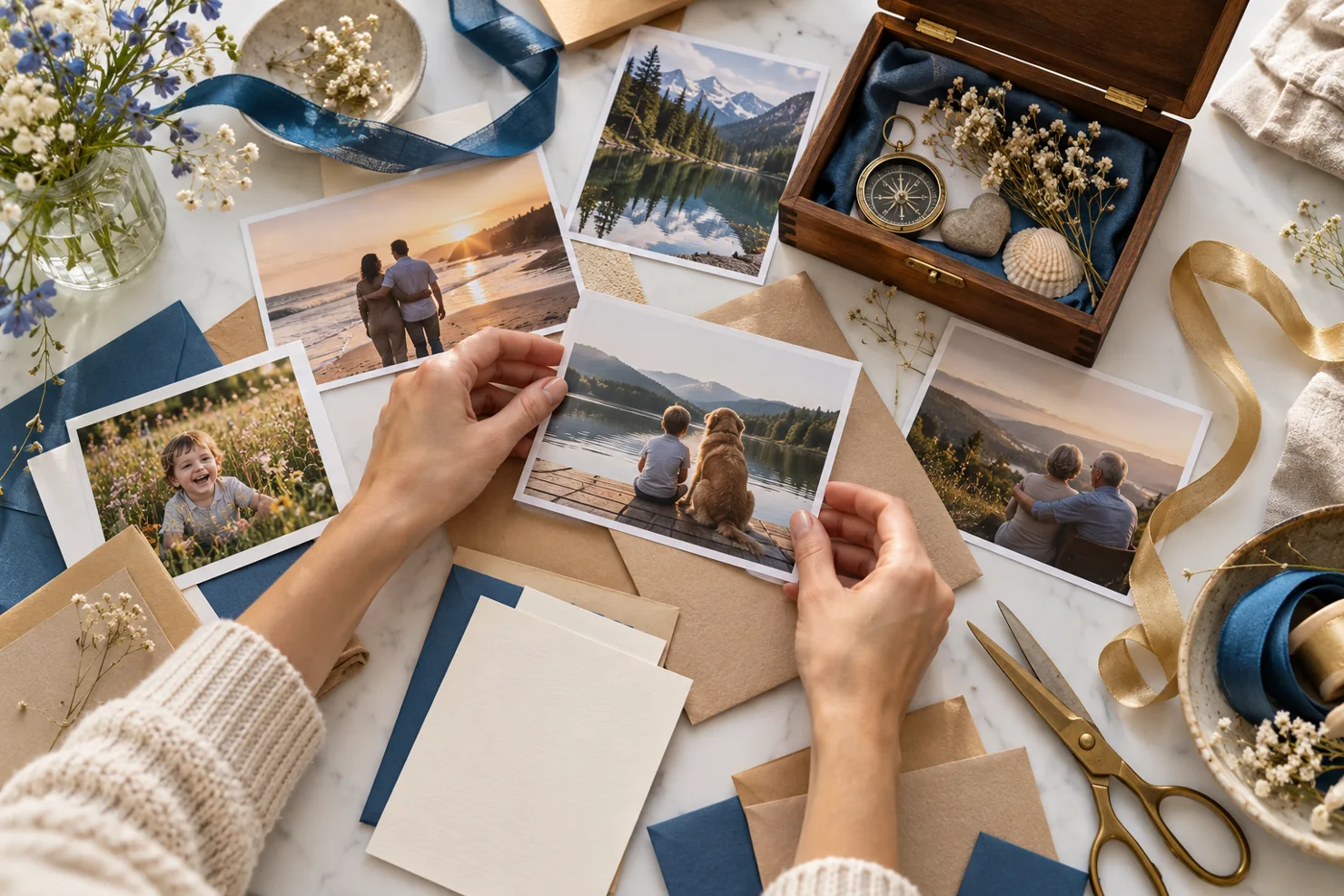
A good tradition is easy to repeat and flexible enough to survive a busy year. It might be a Saturday pancake breakfast, a yearly walk, or a question everyone answers at dinner. Its value comes from returning to it together.
Start with an existing habit
Look for something your household already enjoys. If Sunday dinner happens often, add a rotating choice of music. If everyone walks after a holiday meal, bring a camera and take one picture in the same place each year. A tradition built on an existing rhythm is less likely to become another obligation on the calendar.
Choose one purpose: connection, remembrance, play, rest or welcome. If the purpose is connection, the details can change while the shared time remains.
Give the ritual a tiny structure
State when it happens, who can take part and what the simple action is. “On the first cool weekend, we make soup and invite whoever is nearby” is enough. Assign a small task to each participant if they enjoy it. Children can choose a song or set out bowls; distant relatives can send a voice note.
Keep materials ordinary. A tradition that requires specialized supplies or elaborate planning may work once and disappear. Save a small record afterward if the family enjoys revisiting it.
Make room for change
Families move, grow, separate and grieve. The ritual may need a smaller version in a hard year. You can hold the same dinner on a different date or take a shorter walk. Ask the people involved what still feels right instead of preserving a format that no longer fits.
When someone is absent, offer a way to remember them without insisting everyone grieve in the same style. You could cook a recipe they loved or share a story, then let the evening continue naturally.
Traditions for different kinds of days
- Birthday: ask the person to choose breakfast and write one hope for the year.
- First day of school: take a photograph and ask one question about what they are curious to learn.
- Ordinary Friday: choose a film or dinner together from two simple options.
- Season change: revisit a nearby place and notice what looks different.
- Family visit: invite a relative to teach one recipe or tell one story.
None of these needs to happen perfectly. If a ritual feels stressful, shrink it until it fits the people you are now.
Keep the memory without keeping everything
A dated photograph, a short audio clip or a line in a notebook can document a year. Select a few moments rather than trying to capture every part of the day. For physical keepsakes, our guide to a family memory box offers a manageable way to label and store them.
Ask before sharing images or recordings publicly. A tradition is shared with the participants first; the internet does not need to be part of it.
How to know it is working
People remember it, ask for it or feel comfortable suggesting a variation. The tradition gives the day a little shape without putting one exhausted person in charge of making magic. Check in after a few repetitions: which part did everyone like? Which part took too much work? Keep the good part and let the rest go.
Start with one small action at the next natural opportunity. You can name it a tradition later, after it becomes something people look forward to doing again.
Invite participation without assigning a role
A new partner, stepchild or relative by marriage may want to join slowly. Explain the custom and ask what they would enjoy changing. Let people watch for a year before taking part. A tradition is more welcoming when it can grow to include new people rather than testing whether they already know the rules.
For families in different cities, keep the shared piece small: everyone takes a photograph of their Sunday breakfast, or relatives read the same short story on a call. Do not assume everyone has the same time zone, technology or energy. The ritual should connect people, not measure attendance.
Design for the hardest ordinary year
Before declaring a tradition, ask whether it works during a busy season. A full-day outing may be wonderful once but difficult every year. A short walk and hot drink can expand when the calendar allows and shrink when it does not. Write down the essential part: perhaps it is being together, not reaching a particular destination.
Keep a backup version. If rain cancels a picnic, eat the sandwiches indoors. If someone is away, mail a note or save their place for next time. Flexibility is how a ritual lasts.
Distinguish a tradition from a rule
A tradition invites. A rule punishes people for missing a date or doing it differently. If a teenager no longer wants the childhood photograph, ask whether they would rather pick the location or stop for a while. The point is a positive shared memory, not compliance. Letting a ritual end can also honor the stage of life it belonged to.
Occasionally ask what everyone would like to repeat. Their answers may surprise you: the elaborate meal may matter less than the hour spent playing cards afterward. Keep what people remember fondly and release the rest.
Tell future participants why it started
Write a short note about the beginning: who suggested the walk, why you chose that recipe, or what made the first gathering funny. Do not polish the origin into a myth. A real story allows younger relatives to add their own chapter later. If the ritual has roots in a cultural or religious practice, describe it accurately and listen to people who belong to that tradition.
Begin small enough that you can enjoy it next time. Repetition, consent and room to adapt turn an ordinary habit into something people choose to keep.
Record one detail each year
A single note can help a ritual gather texture over time: the weather on the walk, the soup someone requested, or a child's answer to the yearly question. Put the note in an envelope or a small notebook. Do not require every participant to pose for a photo or perform the same answer. People change, and the differences are part of what makes the record interesting.
After a few years, you may see that the least planned part became the favorite. Keep that discovery in mind when the next season comes around. The simplest version that people still want to repeat is the one to protect.
A tradition does not need a name or a photograph to count. It can be the way someone always sets another place, the song played while dinner is made, or the walk taken after a visit. Notice which small actions people already request. Those are better candidates than a new plan that requires everyone to learn and prepare. Keep enough structure to return to the moment, and enough freedom for everyone to feel welcome.
Take one idea that fits the person in front of you. The small detail you can act on today is usually the best place to start.