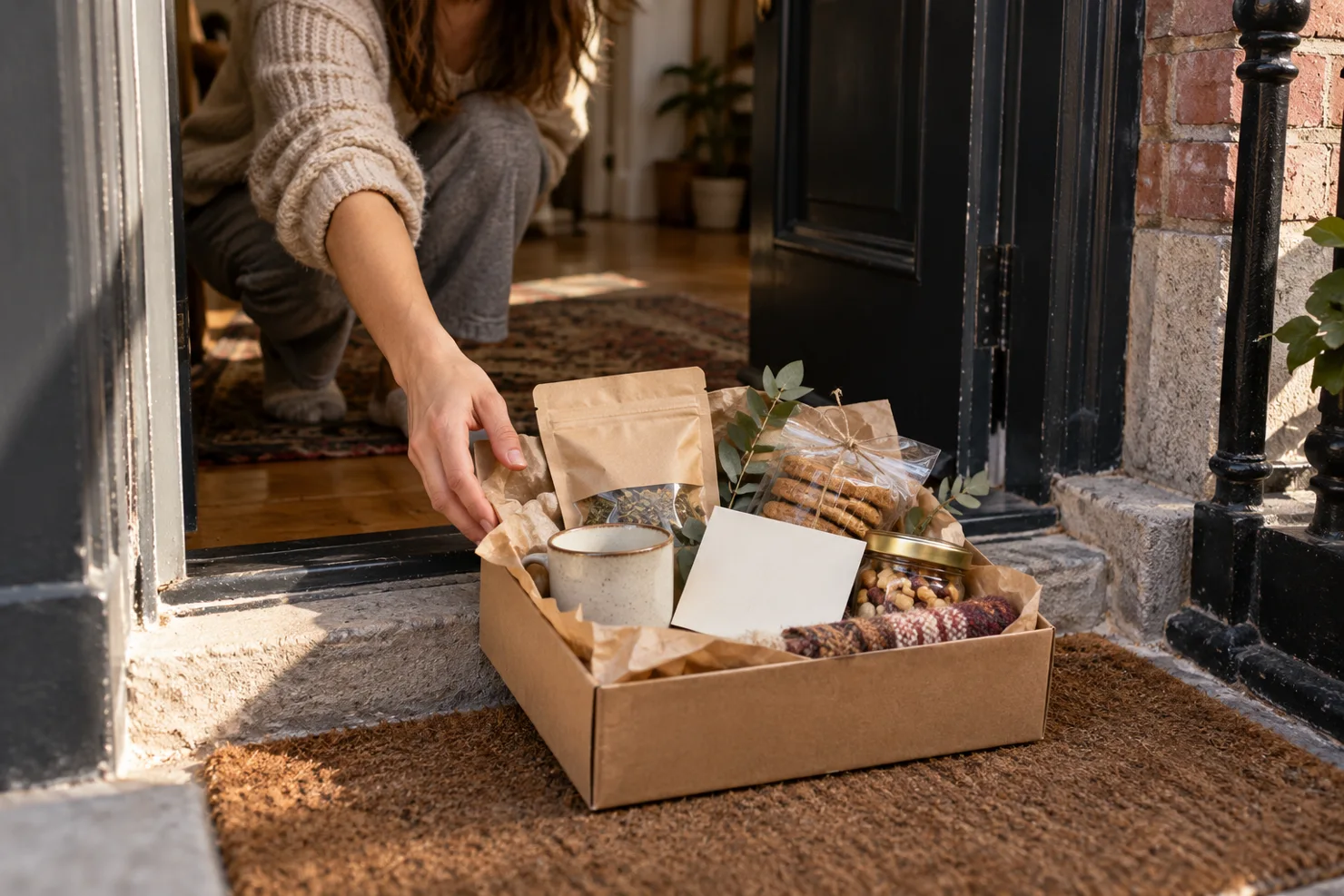
The most welcome care package removes a tiny task. A friend working long shifts may prefer ready-to-eat snacks and a simple note over a box of decorative objects that need a home.
Ask one practical question
Before shopping, ask “Would a food package, useful supplies or a small treat be most helpful?” A question respects allergies, budgets and the possibility that your friend needs nothing delivered right now. If the situation is sensitive, avoid making them narrate it. You can offer two concrete options and let them choose or decline.
For a friend in a shared household, consider whether a package should include something for everyone or give the recipient a rare personal treat. Both can be kind; neither should be assumed.
Make a package with a single purpose
For a demanding workweek, try shelf-stable snacks, tea they already enjoy and a note offering to handle a specific errand. For recovery at home, choose easy entertainment or a ready meal after checking dietary needs. For a new apartment, a small cleaning kit and a favorite pantry staple may be useful. For exam season, keep the package compact and easy to open between study sessions.
Limit the box to three to five items. The point is to make the recipient's day lighter, not to create a project of sorting packaging.
What to leave out
Skip strong scents unless you know they are welcome. Avoid supplements, products that make health promises, or jokes about the person’s difficult situation. Check that anything perishable will survive shipping and that the recipient will be home to receive it. If you are mailing food across a border, check the destination's restrictions first.
Do not assume everyone enjoys an inspirational quote. A card that says “No need to reply; I was thinking of you” can make the gesture easier to receive.
Package without wasteful fuss
Use a box that fits, cushion breakable items and keep a handwritten card on top. Reused clean packing paper works well. Put liquids in sealed bags and separate them from paper. If the gift is delivered directly, include your name clearly so the package does not become a mystery.
For local friends, a doorstep delivery can be thoughtful if you arrange a suitable time. Do not leave food outdoors for hours or turn a surprise into an unannounced visit.
Match the note to the moment
Name the person's situation without trying to fix it: “This week sounds full, so I brought a few things for your breaks.” Offer help you can actually provide, such as a ride on Thursday or dinner next Tuesday. A specific offer removes the work of deciding how to ask.
If your friend is grieving, avoid a demand for optimism or an answer. If they are celebrating an achievement, acknowledge the effort behind it. A short, sincere note is enough.
Three packages at different budgets
| Budget style | Contents | Personal touch |
|---|---|---|
| Almost free | Borrowed book, homemade snack | List three favorite pages |
| Small | Favorite tea, snack, note | Schedule a walk together |
| Shared gift | Meal delivery or group contribution | One card from the group |
Money does not measure how well you noticed your friend. Keep the package manageable, clearly addressed and easy to use.
Choose items for the journey
If shipping, select sturdy items that will not melt, leak or break easily. Put heavier items on the bottom and place the card where it will be found first. For a local delivery, fresh food may be possible, but confirm the recipient will be home and able to refrigerate it. Someone juggling a demanding week should not have to decode an unlabeled casserole or dispose of elaborate packaging.
If the package is for a person in a hospital or care setting, check the location's rules before sending flowers or food. A message may be the better first gesture when access or storage is uncertain.
Offer practical help alongside objects
A care package can include a small offer: “I can pick up groceries on Wednesday,” or “I can walk the dog Friday morning.” Only offer what you are prepared to do. “Let me know if you need anything” is kind, but it makes a tired person design the request. A specific offer can be accepted, declined or adjusted in one sentence.
For a friend who lives far away, a call at a time they choose or a short voice message may be more valuable than shipping costs. Ask whether conversation would help or whether they would rather have quiet.
Think about recurring support
When someone is recovering, grieving or caring for another person, attention can fade after the first week. Put a reminder in your own calendar to check in later. A second small delivery or offer of help a month after the initial rush may be more useful than one oversized box at the beginning. Do not demand an update in exchange for the gesture.
Keep the relationship normal as well. Send a funny photograph, a book recommendation or an ordinary invitation if that is how you usually connect. The recipient can choose whether to talk about the hard part of their life.
A checklist before you seal the box
- Are all foods and scents welcome?
- Can the recipient use the contents without extra purchases?
- Will the packaging survive delivery and be easy to discard?
- Have you included your name and a note that does not require a reply?
- Did you avoid making promises you cannot keep?
If any answer is uncertain, simplify. The most helpful package usually feels easy from the moment it arrives.
Respect a no-thank-you
A friend may decline food, visits or gifts. Their answer can reflect a crowded room, a difficult relationship with receiving help or simply a need for rest. Accept it without asking them to reassure you. A brief “I understand; I’m here if that changes” keeps the door open. You can check in later with an ordinary message that does not turn the earlier offer into a debt.
Care works best when the person retains choice. If you are unsure, send a note first. The package can follow if they welcome it. Consideration includes both the gesture and the space to decline it.
One more useful test is what happens after the box is empty. If the recipient must wash delicate items, arrange a complicated return or find permanent storage, the package may have added work. Favor items they can enjoy now and dispose of easily. If they are recovering, give them a clear way to postpone a visit or delivery. Let your gesture be flexible enough to meet the day they are actually having.
Take one idea that fits the person in front of you. The small detail you can act on today is usually the best place to start.